Lithuanian Culture
Use this as a visitor guide to Lithuanian culture: song festivals, museums, language, crafts, food traditions, memorial places and the everyday etiquette that helps a trip feel more connected.
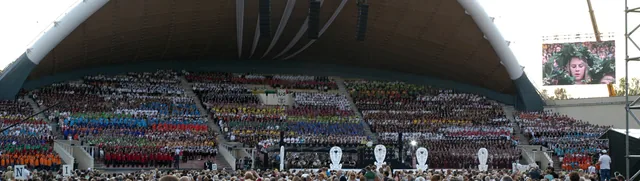
The Lithuanian Song and Dance Festival, one of Europe's largest folk gatherings
How visitors can experience culture
Time a festival
The Song and Dance Celebration is the headline event, but Kaziukas Fair, Joninės, city culture nights and regional craft fairs are easier to fit into an ordinary trip.
Use museums well
In Vilnius, pair the National Museum, MO Museum or Palace of the Grand Dukes with a walk through the Old Town. In Kaunas, modernism and Čiurlionis make culture feel concrete.
Buy meaningful crafts
Linen, ceramics, wooden objects, amber and small food products are better souvenirs when bought from makers, museum shops or regional fairs rather than generic stalls.
Learn a few phrases
Ačiū, labas, prašau and atsiprašau are small words, but they change the tone of shops, museums, guesthouses and market conversations.
Open phrase guideThe Song Festival: Heart of the Culture
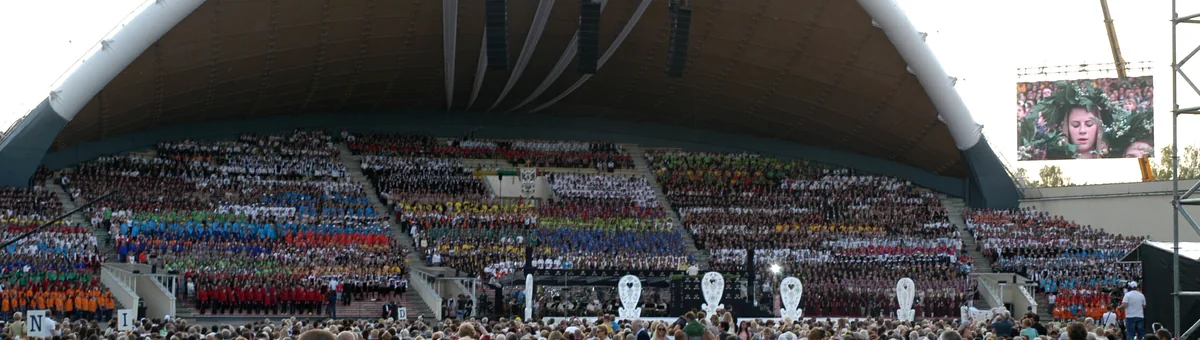
The Song and Dance Festival brings tens of thousands of choristers and dancers to Vilnius from across Lithuania and the Lithuanian diaspora. The first Lithuanian festival was held in 1924. The Baltic song and dance celebrations in Lithuania, Latvia and Estonia are recognised by UNESCO as Intangible Cultural Heritage of Humanity.
It is not simply a cultural event. It is a political symbol, an act of national memory. During the Soviet period, the Song Festival was one of the few places where Lithuanians could publicly express their identity. The songs were not just melodies. They were a language the Soviet authorities could not fully silence. When the participants of the Baltic Way joined hands in 1989, they sang the songs of the festival.
The Daina: Living Memory
Lithuanian folk songs, known as dainos, cover nature, love, work, death, war and daily life. The repertoire includes different styles rather than one uniform musical form. Sutartinės are a specific multipart tradition in which voices and texts sound together; the Lithuanian National Commission for UNESCO describes them as a form of polyphony.
Youth ensembles learn older songs, universities offer programmes in ethnomusicology and families pass songs between generations. Museums preserve recordings and collections, while concerts, folk evenings and the Song Celebration give visitors opportunities to hear the repertoire performed today.
For a closer introduction to the song tradition, choose a Song Celebration performance, a local folk evening, a museum collection or another live event. The programmes and performers give a more specific starting point than a general description of the country.
Amber: Baltic Gold
Amber is found on the Baltic shores, and the tradition of collecting and working it goes back thousands of years. Lithuanian amber jewellery ranges from simple raw droplets to elaborate silver-and-amber creations. Souvenir markets and specialist jewellery shops offer different designs and qualities of workmanship.
Amber can be explored as jewellery, a craft material and evidence of long-distance Baltic trade. In Palanga, the Amber Museum brings those uses together. Specialist shops offer both raw pieces and worked jewellery, giving visitors a choice of material, design and craftsmanship.
Linen and Textile
Linen weaving has a long history in Lithuania. Traditional Lithuanian textiles are often geometric, using black, white, and earthy red-brown dyes. They were used for everything from tablecloths to suiting fabric, from pillowcases to ceremonial shawls.
Traditional linen textiles are still made in Lithuania today. Specialist shops and markets in Vilnius and other cities sell items for household use and clothing. Compare the fibre information and workmanship when choosing a piece to take home.
Festivals and Traditions Through the Year
16 February (Independence Day) and 11 March (Restoration of Independence Day) commemorate modern Lithuanian statehood. Joninės, or St John’s Night on 24 June, is celebrated around midsummer with bonfires, flower crowns, dancing and the search for a mythical fern blossom. Kūčios is the Christmas Eve family meal, traditionally with twelve meatless dishes; interpretations connect that number with the months of the year or the apostles.
Contemporary Art and the Creative Scene
Vilnius has galleries, student exhibition spaces and independent creative centres across the city. Užupis is a well-known arts district, with other venues beyond its boundaries. Lithuanian photographers, sculptors and textile artists exhibit internationally, while the city’s murals offer further ways to explore its history and contemporary life.
The Lithuanian Language as Culture
Lithuanian preserves archaic Indo-European language features also found in ancient languages such as Sanskrit, while continuing to change as a living language. Its cultural history includes the 1864–1904 ban on Lithuanian publications in Latin script and the efforts of book smugglers to keep those publications circulating. That history remains part of the country’s cultural memory alongside the language’s everyday use.
Culture in a wider Baltic context
Song and dance festivals, midsummer customs and craft traditions connect Lithuania with a wider Baltic setting, but each country has its own language, programme and institutions. Travellers continuing north can use the Latvia culture guide to see where the themes overlap and where they diverge.