Vilnius guide
The university quarter, museums and culture around the capital.
Open guideLithuanian research covers laser physics, photonics, biotechnology, cybersecurity and space technology. This guide introduces the institutions, companies and projects behind those fields.
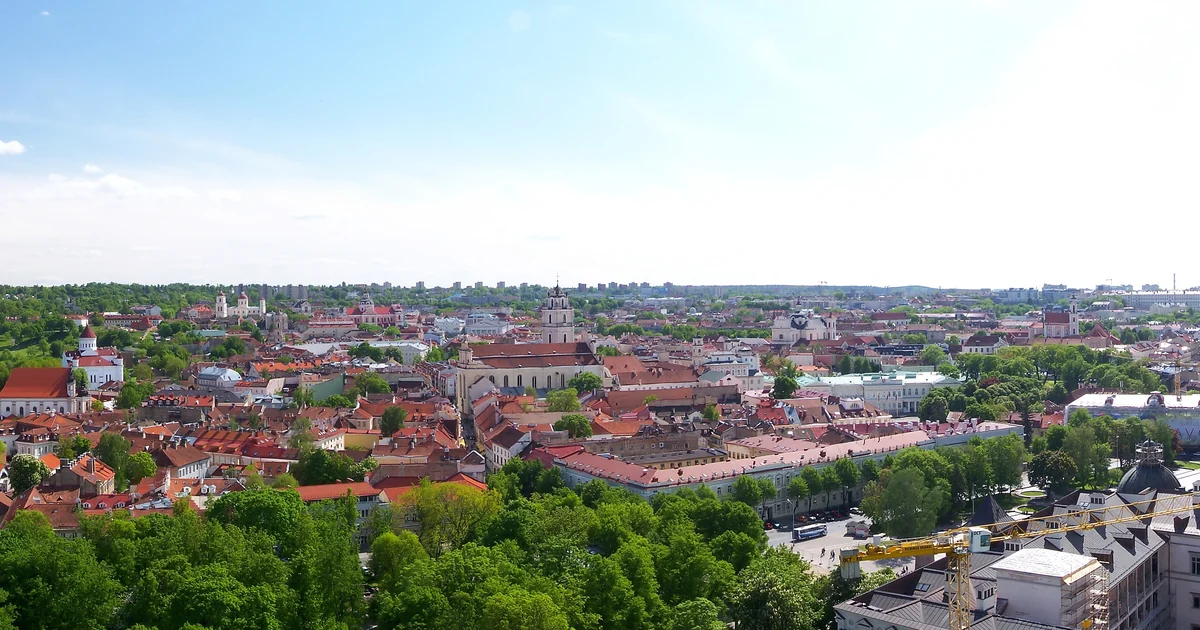
Lithuania's scientific heritage stretches back to the founding of Vilnius University in 1579 - one of the oldest universities in Central and Eastern Europe. Its astronomical observatory, established in the eighteenth century, was among the most active in the region. Under Soviet rule, significant investment in physics, mathematics, and engineering created foundations of expertise that would serve the restored republic well.
Laser physics is an important field in Lithuanian research and specialist manufacturing. Gérard Mourou and Donna Strickland received part of the 2018 Nobel Prize in Physics for chirped pulse amplification; the other part went to Arthur Ashkin. Light Conversion describes Mourou’s collaboration with Algis Piskarskas’s group at Vilnius University’s Laser Research Centre and its work on the related OPCPA technology. Light Conversion manufactures femtosecond lasers and tunable sources; EKSPLA makes solid-state and fibre lasers for scientific and industrial applications. Standa supplies optical, optomechanical and laser equipment.
Lithuania has developed a robust biotechnology ecosystem combining academic research at Vilnius University and Kaunas University of Technology with a growing cluster of private biotech companies. Thermo Fisher Scientific operates a major research and production facility in Vilnius, focusing on molecular biology tools used in research laboratories worldwide. Areas of strength include molecular biology, genetics, enzyme engineering, and biopharmaceuticals.
Lithuania's public cyber-security work is centred on the National Cyber Security Centre under the Ministry of National Defence, with the Regional Cyber Defence Centre supporting threat analysis, training and cooperation with strategic partners. On 7 September 2026, the Ministry announced that the regional centre was entering a new phase as the International Cyber Threat Analysis Hub (HUB), focused on threat hunting, analysis and research with partners. Lithuania hosts the NATO Energy Security Centre of Excellence in Vilnius; NATO's Cooperative Cyber Defence Centre of Excellence is in Tallinn, Estonia, not Lithuania. The country's practical strength is the mix of public-sector cyber readiness, fintech regulation, university talent and a compact technology sector.
Lithuania’s first two self-made nanosatellites, LituanicaSAT-1 and LitSat-1, were sent to the International Space Station in January 2014 and deployed in February. LituanicaSAT-1 was named in honour of the transatlantic pilots Steponas Darius and Stasys Girėnas. Later Lithuanian-built nanosatellites served other missions: LituanicaSAT-2 was launched to demonstrate propulsion in orbit, while NanoAvionics built DEWA SAT-2 for the Dubai utility DEWA for Earth observation. Lithuanian engineers and scientists contribute to European Space Agency missions, and space technology has been identified as a strategic growth sector.
For a travel plan, start with Vilnius University and its courtyards, then add museums or a Kaunas day if you are interested in modernism, technology and student-city atmosphere. This page is context for those choices: it explains why lasers, life sciences and universities appear so often in Lithuania's city stories.
Explore related guides for your trip.