About the dish
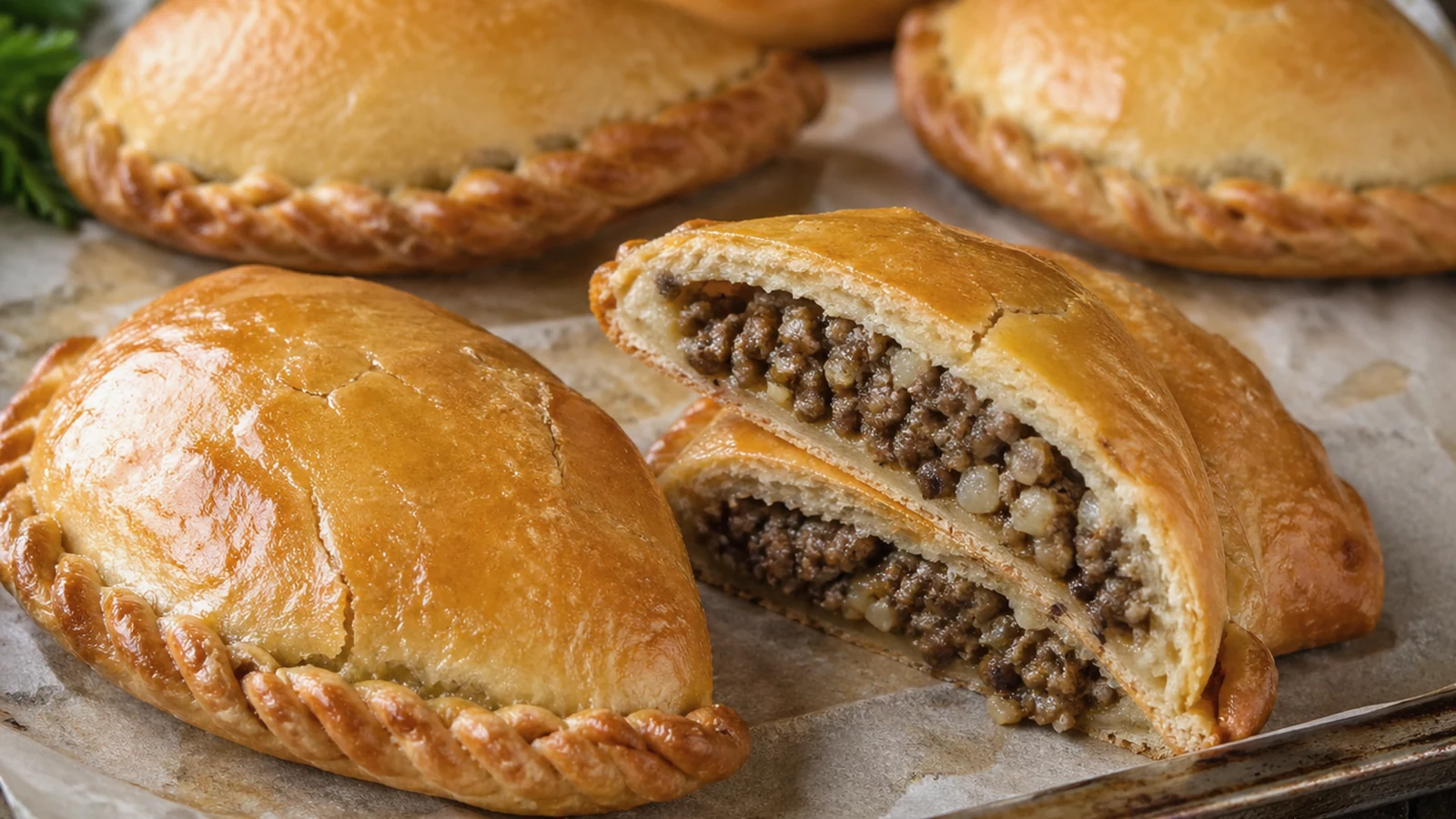
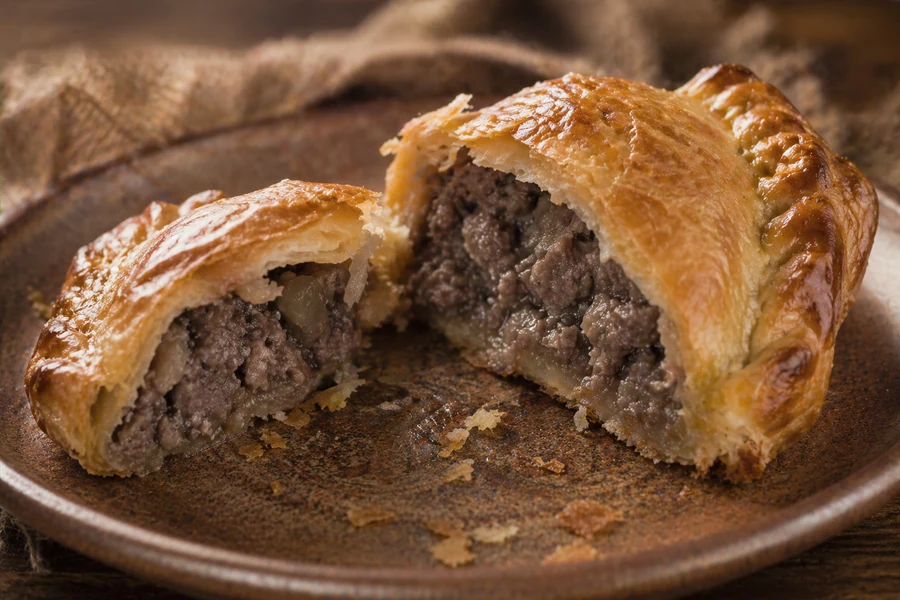
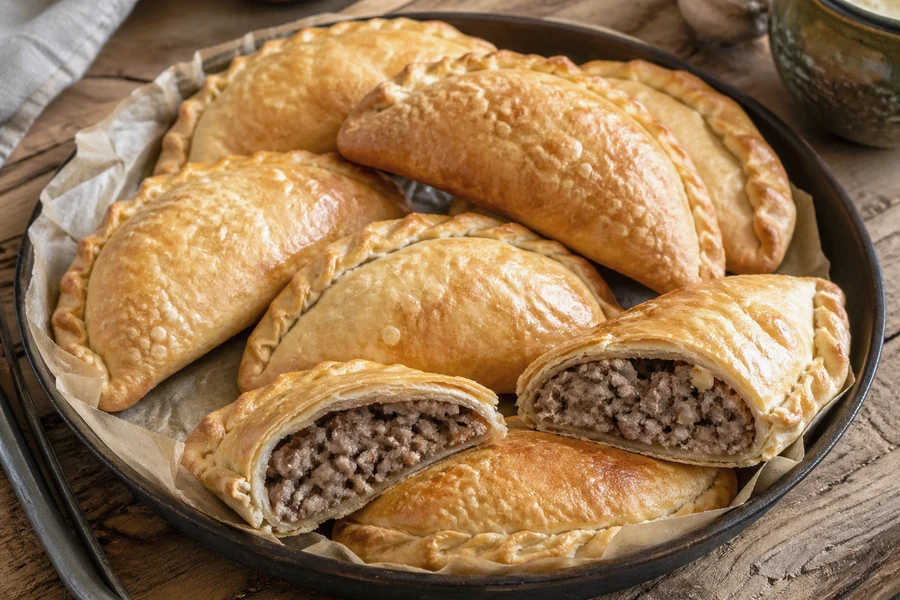
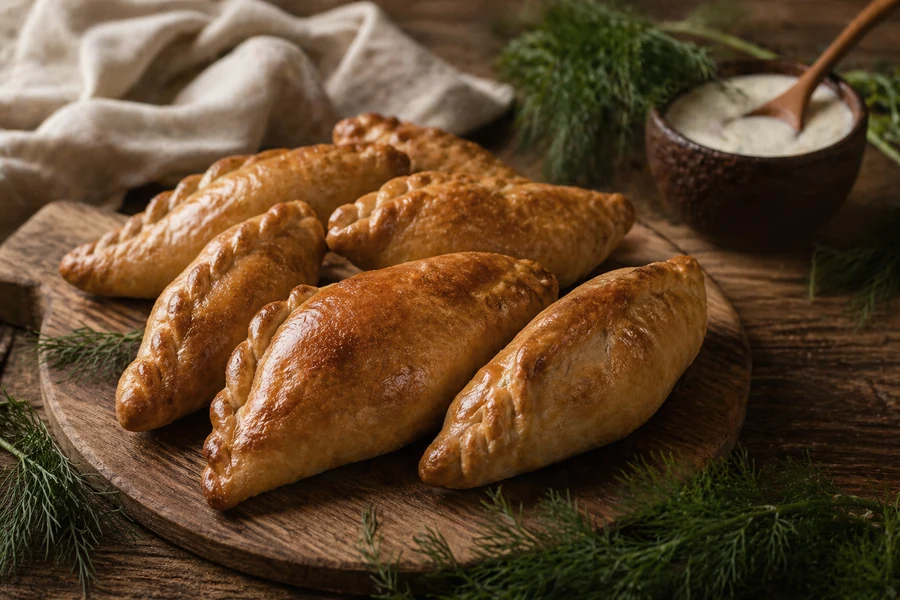
For the home adaptation below, keep the pastry cold and bring it together without prolonged kneading. Divide the filling evenly between the twelve pastries, leaving a clean edge for sealing. The crimp holds the filling inside; a decorative number of folds is not a test of authenticity. A baked pastry’s colour alone does not establish that a raw-meat filling is safely cooked.
Preparation
Choose the filling deliberately: mutton, beef, poultry and vegetable versions are different products. Close the seam firmly to retain juices and leave the pastries a few minutes before eating the hot filling.
Where to taste or learn more
Kiubėtė in Trakai serves Karaim dishes, including kibinai. The Trakai crafts centre also offers a kibinai workshop: check the language, group requirements and booking arrangements directly.
Filling option
For a version without pork, replace the 200 g pork with 200 g lamb, using 600 g lamb in total. This is an alternative to the mixed-meat filling, not an extra ingredient.
Saved privately in this browser. No account needed.
Ingredients (makes 12 kibinai)
Add only what you need, or add the whole recipe at once.
- Pastry: 500 g plain flour
- Pastry: 250 g cold unsalted butter, cubed
- Pastry: 2 large eggs, plus 1 yolk for glazing
- Pastry: 150 ml cold water (more if needed)
- Pastry: 1 teaspoon salt
- Pastry: 1 tablespoon white wine vinegar (helps tenderness)
- Filling: 400 g finely chopped lamb shoulder
- Filling: 200 g finely chopped pork shoulder
- Filling: 1 large onion, very finely chopped
- Filling: 1.5 teaspoons salt
- Filling: 1 teaspoon black pepper
- Filling: 1 teaspoon dried marjoram (oregano can substitute)
- Filling: 50 ml cold water (helps keep filling juicy)
- To serve: clear chicken or beef broth, hot, in small bowls on the side
Method
- Make the pastry: combine flour and salt in a bowl. Rub in the cold cubed butter with fingertips until it resembles coarse breadcrumbs. Beat the eggs with the vinegar and cold water; pour into the flour mixture and bring together quickly into a dough. Do not overwork. Wrap and refrigerate for 30 minutes.
- Make the filling: combine the chopped lamb (and pork if using) in a bowl with the very finely chopped onion, salt, pepper, marjoram, and the 50 ml cold water. Mix well with your hands. The filling should be moist but not wet; the cold water keeps it juicy during baking.
- Preheat oven to 200C (180C fan). Line two baking sheets with parchment.
- Roll the chilled pastry on a lightly floured surface to about 3 mm thickness. Cut circles about 14-15 cm in diameter (a small saucer or large bowl makes a good template). Re-roll trimmings as needed.
- Divide the prepared filling into twelve equal portions. Place one portion on one half of each pastry circle, leaving a 1.5 cm border. Brush the border lightly with water.
- Fold the empty half of pastry over the filling and press the edges together firmly. Starting at one end, twist the curved edge into a rope-like crimp - lift a small section of the edge, press it down at an angle, and continue along the curve. Aim for 15-20 even crimps.
- Place the kibinai on the baking sheets. Beat the remaining egg yolk with a tablespoon of water and brush over each pastry. Pierce the top once with a fork to release steam.
- Bake for 35-40 minutes until deep golden brown. Use a clean food thermometer to check the centre of the meat filling: reach 70°C for 2 minutes, or an equivalent combination such as 75°C for 30 seconds. Continue cooking if needed; pastry colour alone is not a doneness check. Rest for 5 minutes before serving with a small bowl of hot clear broth alongside.
Estimated energy is calculated from the listed quantities. Actual values vary with brands, optional ingredients and serving size. For dishes fried in fat, the amount absorbed also changes the estimate.
Mentioned by bread bakers in Japan
リトアニアのトラカイで、カライムの人々が600年受け継いできた三日月形のパイ、キビナイ(Kibinai)。kicchow(嬉兆)では、その歴史と、羊肉と玉ねぎを包んで日本の家庭のオーブンで焼くための分量とコツを、日本語で紹介しています。