About the dish
This bread needs a schedule for the starter, dough and cooling, not just the oven. The stages below are sequential. Reserve the baking day before mixing, and let the loaf finish cooling before slicing; cutting a hot rye loaf does not show the final crumb texture. The starter and room temperature affect how quickly the dough develops.
Preparation
Weigh the starter once as specified in the ingredients. A rye-heavy dough is sticky and behaves differently from wheat dough; allow the baked loaf to cool before slicing. Check bakery labels for wheat, seeds and other additions.
Where to taste or learn more
A bread-baking activity offers a hands-on introduction to Lithuania's food traditions. Ask whether it includes mixing, fermentation or only shaping a prepared dough.
Bread-making equipment
Use a baking stone, Dutch oven or heavy baking tray, with baking parchment under the loaf. Refresh the starter as described in the first method step; the dough uses that prepared 200 g starter, not a second portion.
Allow 2–3 calendar days, including successive waiting and cooling
- Starter refresh: 8-12 hours.
- Bulk fermentation: 12-18 hours after mixing the dough.
- Final proof: 1-2 hours.
- Baking: 60-70 minutes.
- Cooling: at least 4 hours before slicing, preferably overnight.
Saved privately in this browser. No account needed.
Ingredients (1 large loaf, simplified home version)
Add only what you need, or add the whole recipe at once.
- Starter (200 g): 100 g active rye culture, 50 g rye flour, 50 g water
- For the dough: 600 g rye flour (whole grain or dark)
- For the dough: 200 g strong white wheat flour
- For the dough: 500 ml warm water
- For the dough: 200 g refreshed sourdough starter (from above)
- For the dough: 15 g salt
- For the dough: 1 tablespoon honey or dark molasses (optional, for slight sweetness)
- For the dough: 2 teaspoons caraway seeds (optional, traditional in some regions)
- For shaping: extra rye flour for the bench
Method (successive stages over 2–3 calendar days)
- Day 1, evening: refresh your sourdough starter by mixing 100 g active rye sourdough culture with 50 g rye flour and 50 g water in a clean jar. Cover loosely. Leave at room temperature 8-12 hours; the starter should be doubled and bubbling actively when ready.
- Day 2, morning: in a large bowl, combine the rye flour, wheat flour, salt, optional honey, and optional caraway seeds. Add the warm water and 200 g of the refreshed sourdough starter. Mix into a sticky, dense dough; rye dough does not develop gluten the way wheat dough does, so it will not be smooth. Mix thoroughly for 5 minutes.
- Cover the bowl and let bulk-ferment at warm room temperature (22-25C) for 12-18 hours. The dough should rise noticeably (about 50-75% in volume - rye does not rise as much as wheat) and develop a complex tangy aroma.
- Turn the dough onto a heavily-floured surface. Shape gently into a round dome - do not knead, which deflates rye dough. Place on a piece of parchment (or calamus leaves if available).
- Cover and let proof for 1-2 hours, until the dough is jiggly and visibly puffed.
- Preheat oven to 240C with the baking stone or Dutch oven inside, for at least 45 minutes.
- Carefully transfer the loaf onto the hot stone or into the Dutch oven. If using a Dutch oven, cover for the first 25 minutes. Bake at 240C for the first 15 minutes, then reduce to 180C and continue baking for 45-55 minutes more (uncovered if using Dutch oven from minute 25). The bread is done when the crust is dark mahogany brown and the bottom sounds hollow when tapped.
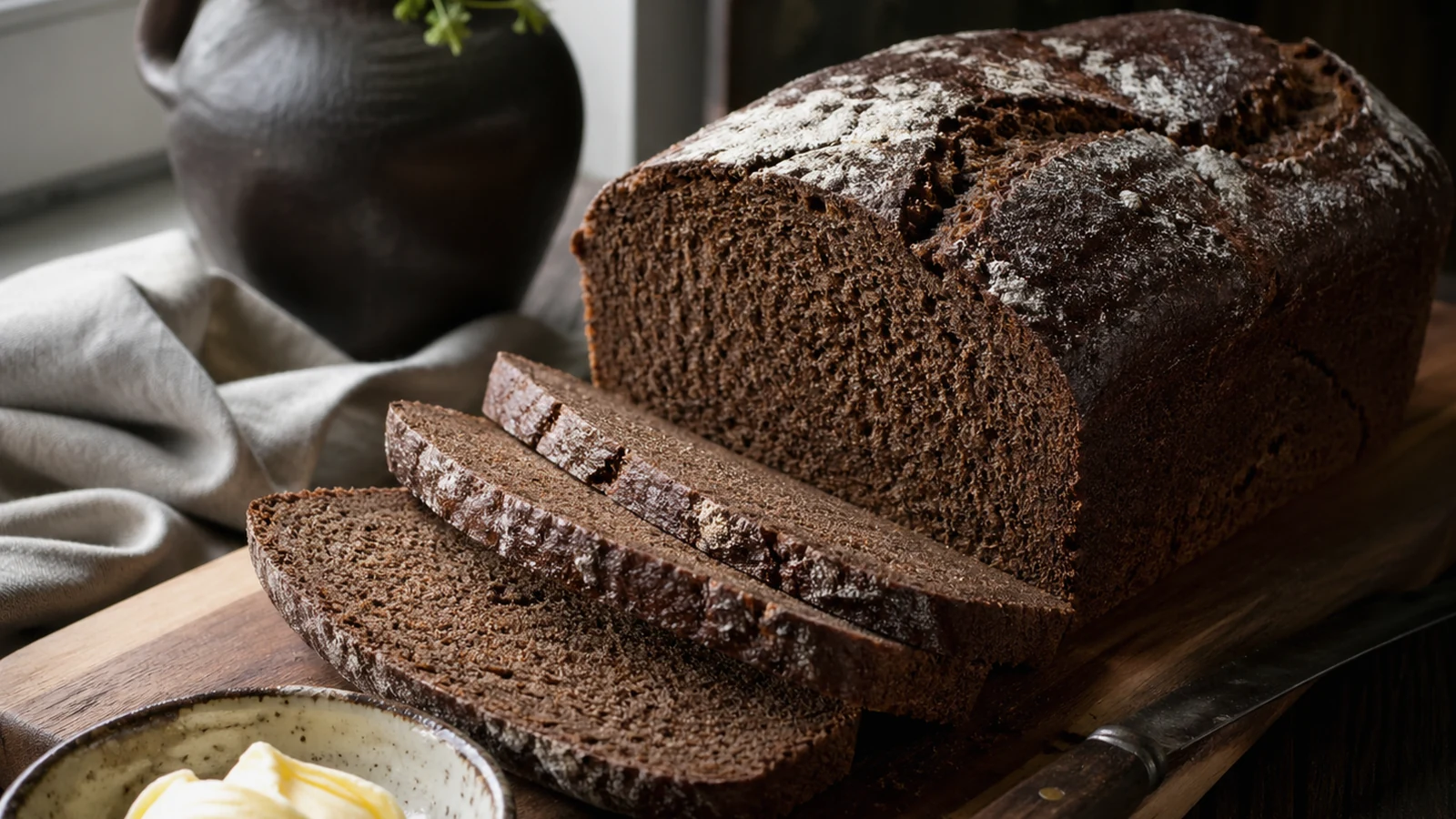
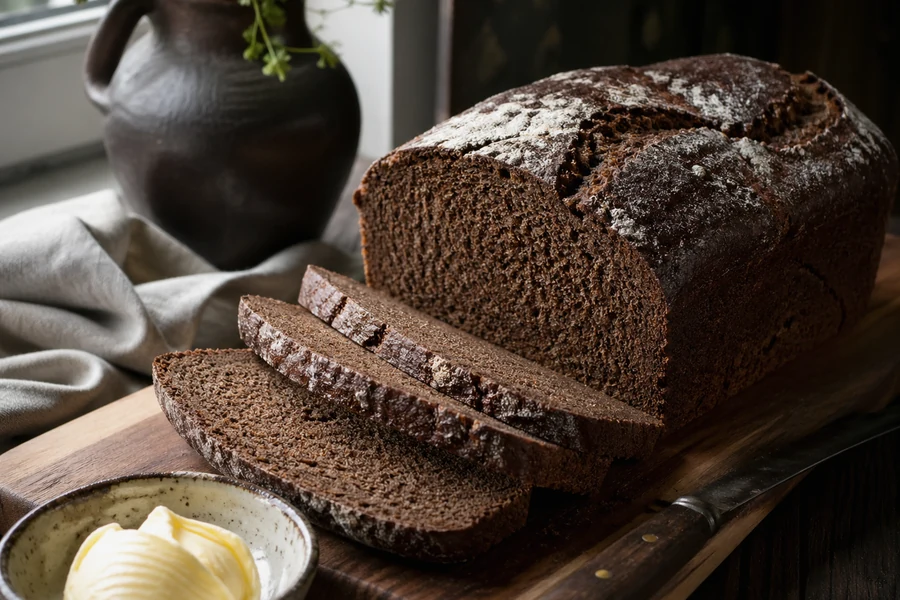
- Cool on a wire rack at least 4 hours, ideally overnight, before slicing. The flavour and texture continue to develop during cooling.
Estimated energy is calculated from the listed quantities. Actual values vary with brands, optional ingredients and serving size. For dishes fried in fat, the amount absorbed also changes the estimate.